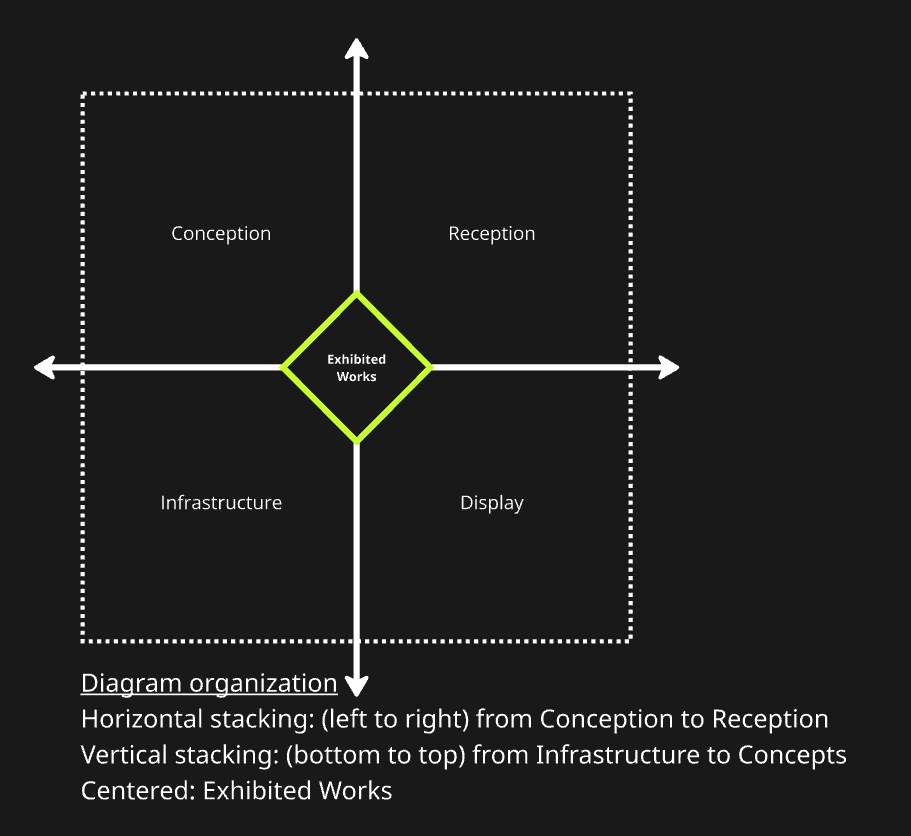
This case study is part of Paik Replayed, a research project looking at how digital and hybrid exhibitions work — how artworks travel online, get transformed, and find new audiences. One part of the project is building a database of past digital exhibitions, tagging them with a shared taxonomy, and mapping the connections between artists, institutions, and technologies. Case studies let us zoom in on specific works and see how those categories play out — or fall apart — in practice.
Hybrid Exhibitions as Performances of the Self
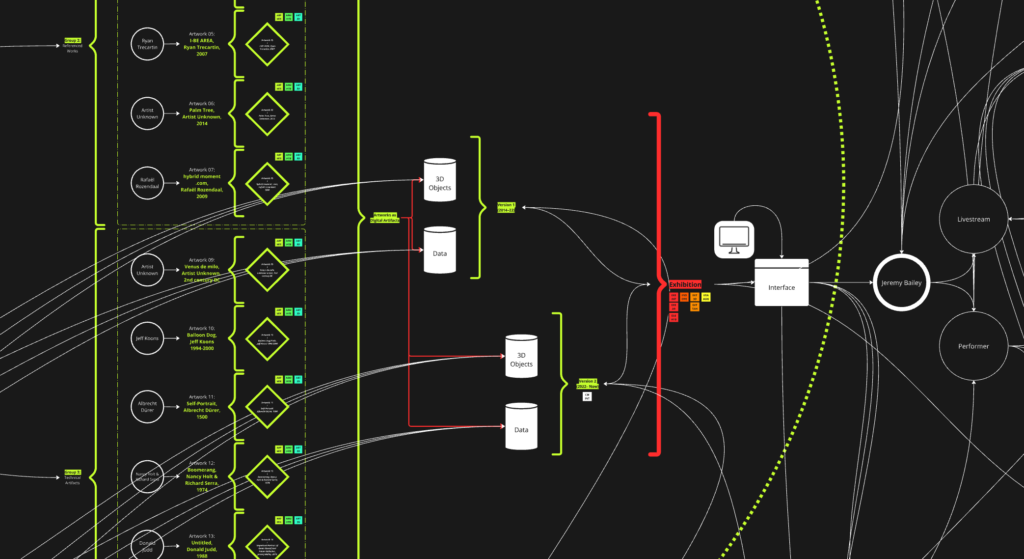
In Nail Art Museum, Jeremy Bailey makes himself the institution. The show, the artist, the museum — it’s all the same person. Which sounds absurd, and that’s probably the point.
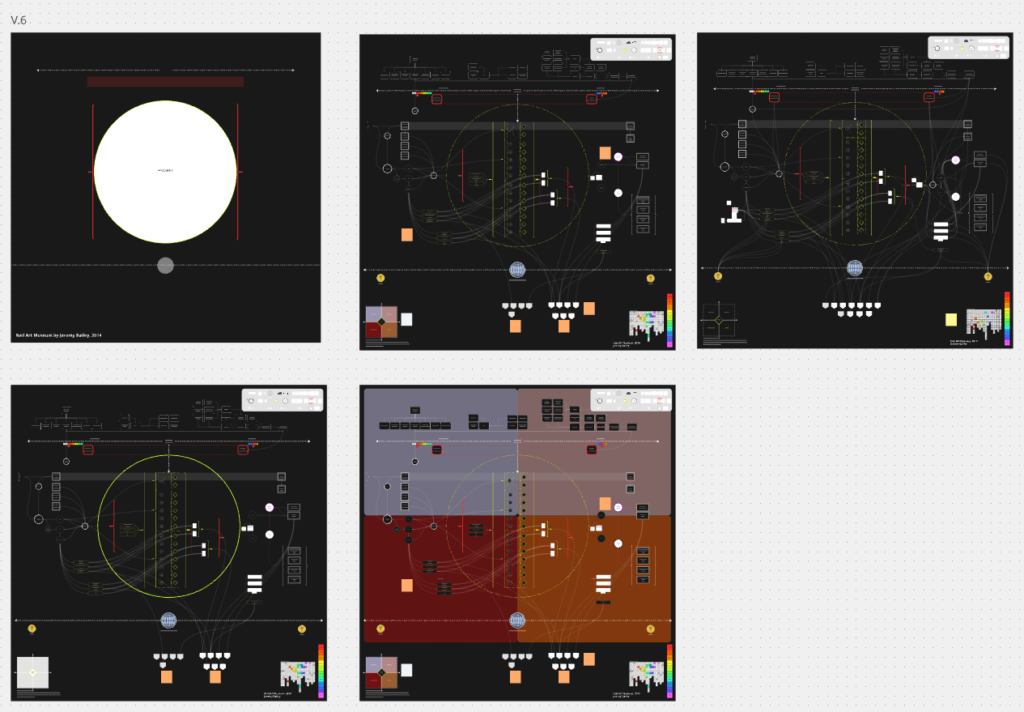
Bailey started the project in 2014 as a series of live-streamed performances using Leap Motion sensors and webcam overlays. His hands — covered in virtual 3D models — became the exhibition space. A playful inversion of the museum’s “white-glove” ideal. Early versions were shown at the ICA London and Impakt Festival Utrecht, where gestures animated sculptural AR objects in real time.
From Gesture to Augmentation
What’s interesting is how the project kept changing shape. By 2022 it had evolved into a set of mobile AR filters built in Lens Studio, meaning anyone with a phone could re-perform the museum themselves. It moved from installation to app store, from one physical venue to basically everywhere.
Hybridity as Method
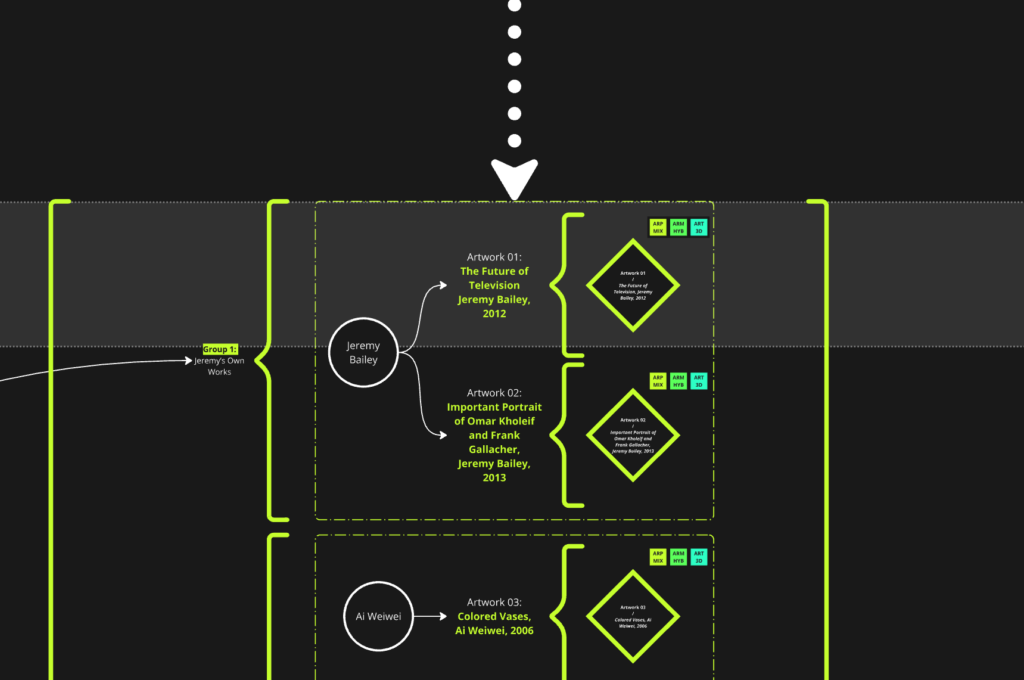
In the Paik Replayed taxonomy, Nail Art Museum ends up in several places at once — which itself says something. It’s tagged EXE-HYB (an exhibition merging physical and digital into one shared experience), ARM-HYB (an artwork combining material and virtual elements), AUR-HYB (connecting in-person and online audiences simultaneously), and EXA-AUG (a digital layer that transforms real space). When a single work activates that many tags, it usually means the categories are doing their job — or that the work is genuinely difficult to pin down.
The Artist as Institution
Bailey’s practice has always had a satirical edge — he takes the language of Silicon Valley and the art world and plays them off each other. In Nail Art Museum that critique becomes physical: his own body becomes the institution. The museum isn’t somewhere you go, it’s someone you watch. Or become.
There’s something in this that connects back to Paik — the idea of the artist as a media interface, someone who doesn’t just make work but is the channel.
Reflections
Nail Art Museum keeps changing shape — from stream to installation to filter to something people use on their own phones. It’s hard to say when, or whether, it’s finished. Which is maybe what makes it interesting for a project trying to understand what it means to exhibit something digitally. The exhibition doesn’t end. It just becomes part of how people look at themselves on a screen.